Summary
The best bathroom floor is water-resistant, suitable for wet feet and correctly installed over a firm, prepared base. Porcelain tiles are durable, while good bathroom vinyl feels warmer and has fewer joints. Choose for the room and household rather than appearance alone.
Porcelain and ceramic bathroom floor tiles
Tiles are hard-wearing and available in many colours and sizes. Choose a floor tile with a surface suited to wet feet, not a highly polished wall tile.
The floor below must be firm and prepared correctly to reduce movement and cracking.
Vinyl and waterproof bathroom flooring
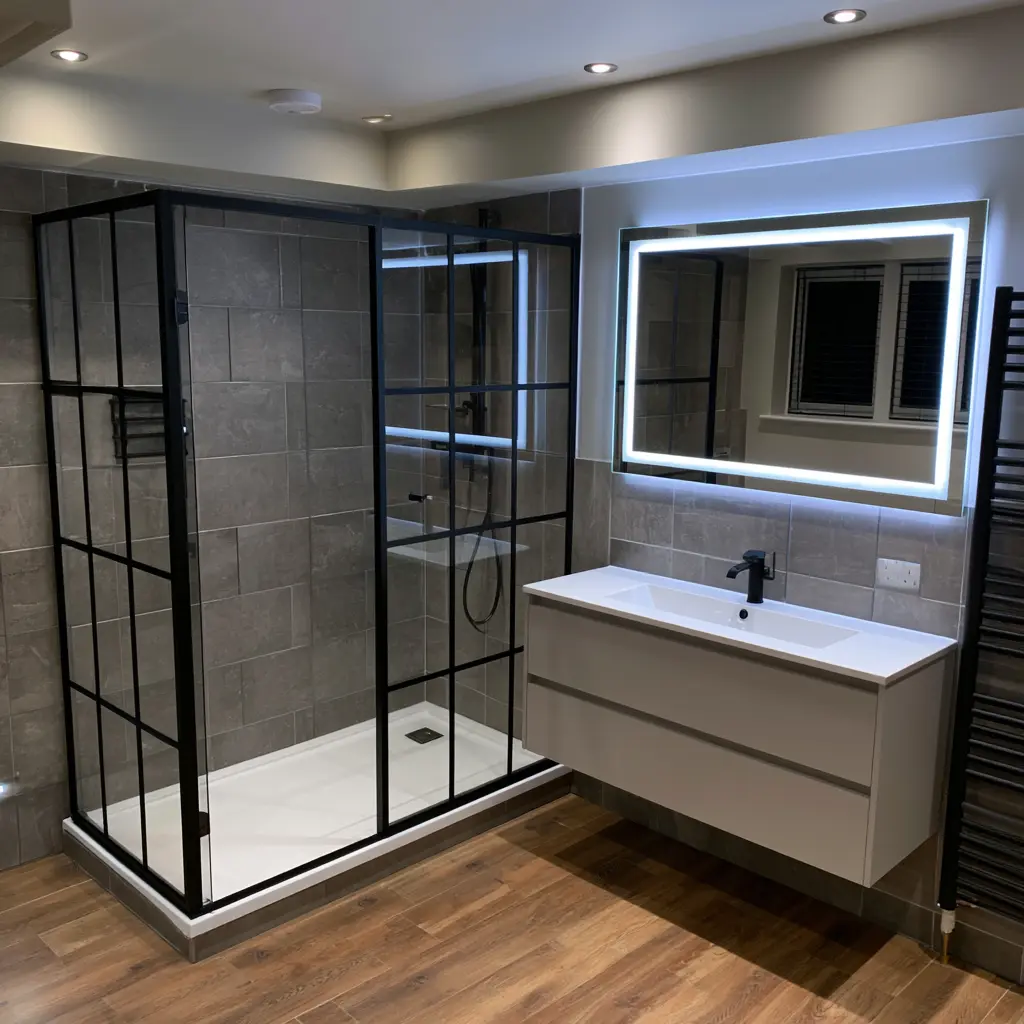
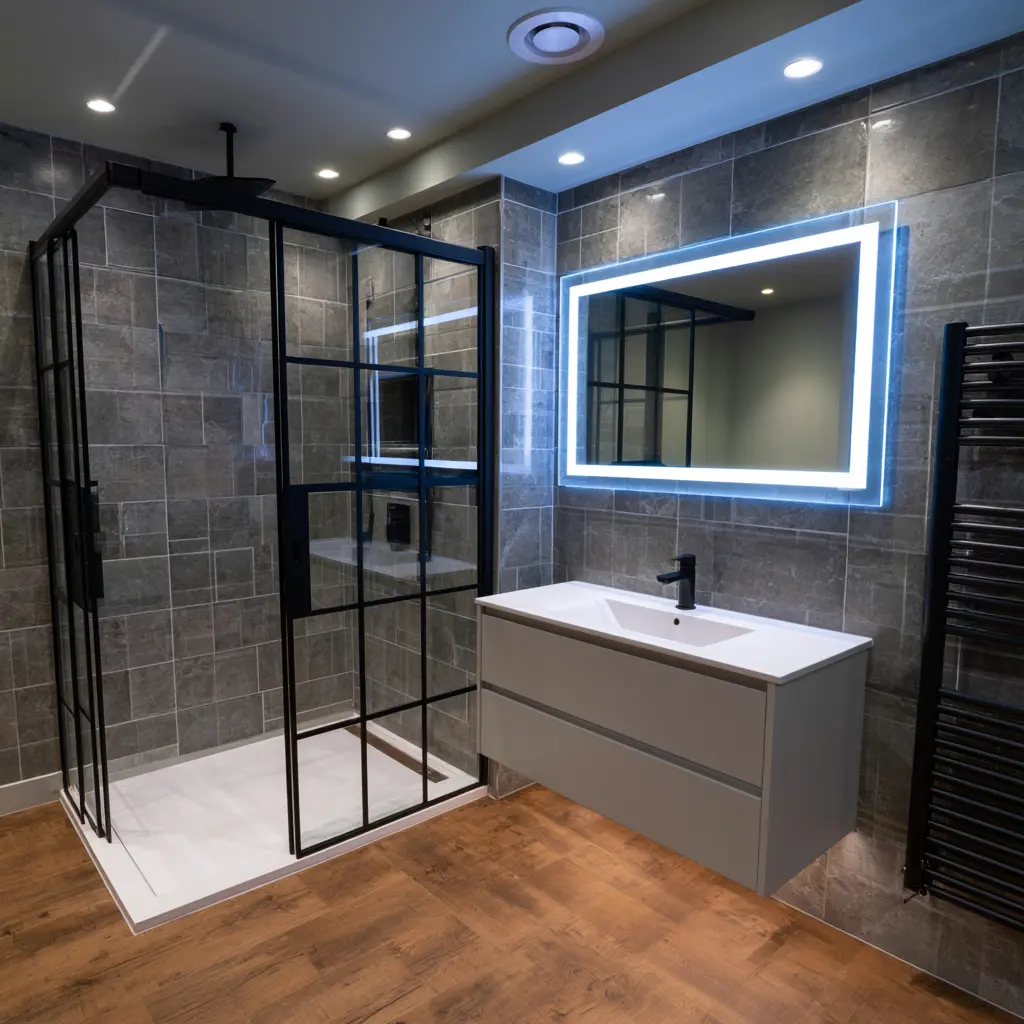
Good-quality bathroom vinyl can feel warmer and quieter than tile. Sheet products also have few joints, which can suit family bathrooms and accessible shower rooms.
The floor still needs careful preparation because bumps and gaps can show through the finish.
Bathroom underfloor heating
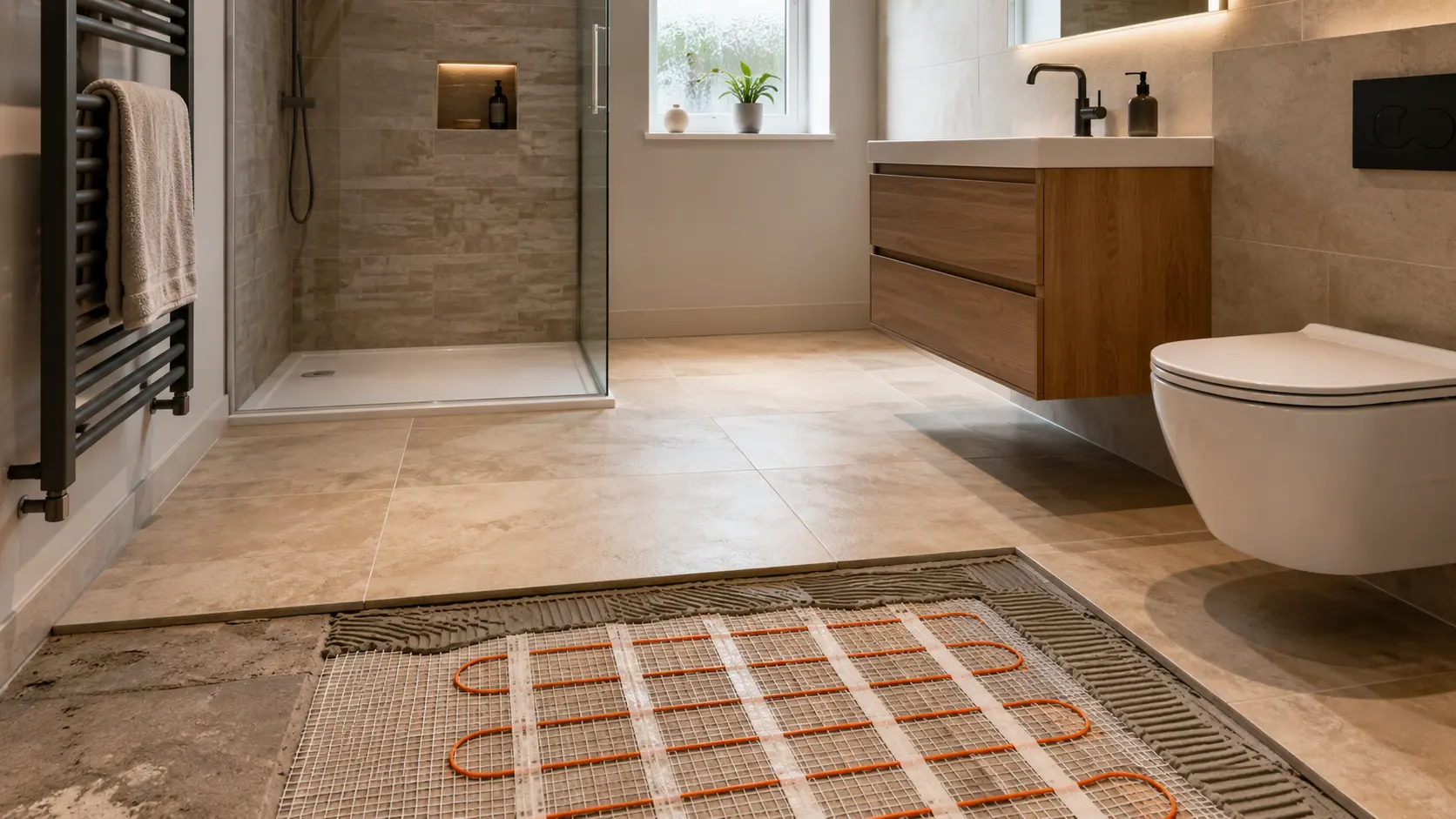
Electric underfloor heating can make tiled floors more comfortable, but it should be planned with the floor build-up, controls and chosen finish. It does not replace good room heating in every home.
Ask for the heating and floor preparation to be included clearly in the quote.
Safety and preparation come before colour
Bathroom floors become wet, so ask whether the chosen product is intended for floors and suitable for the way the room will be used. Texture can improve confidence underfoot, but very deep texture may be harder to clean. Accessible bathrooms may need a more specific slip-resistant floor and correctly formed falls around a level shower.
The finished floor is only as dependable as the base below it. Loose boards, movement, uneven patches and moisture problems should be dealt with before the surface is laid. Preparation can change the finished floor height, so door clearances, thresholds and toilet connections need to be included in the plan.
- Wet-foot grip
- Firm prepared base
- Easy cleaning
- Suitable thresholds and falls
Choose flooring around the whole bathroom
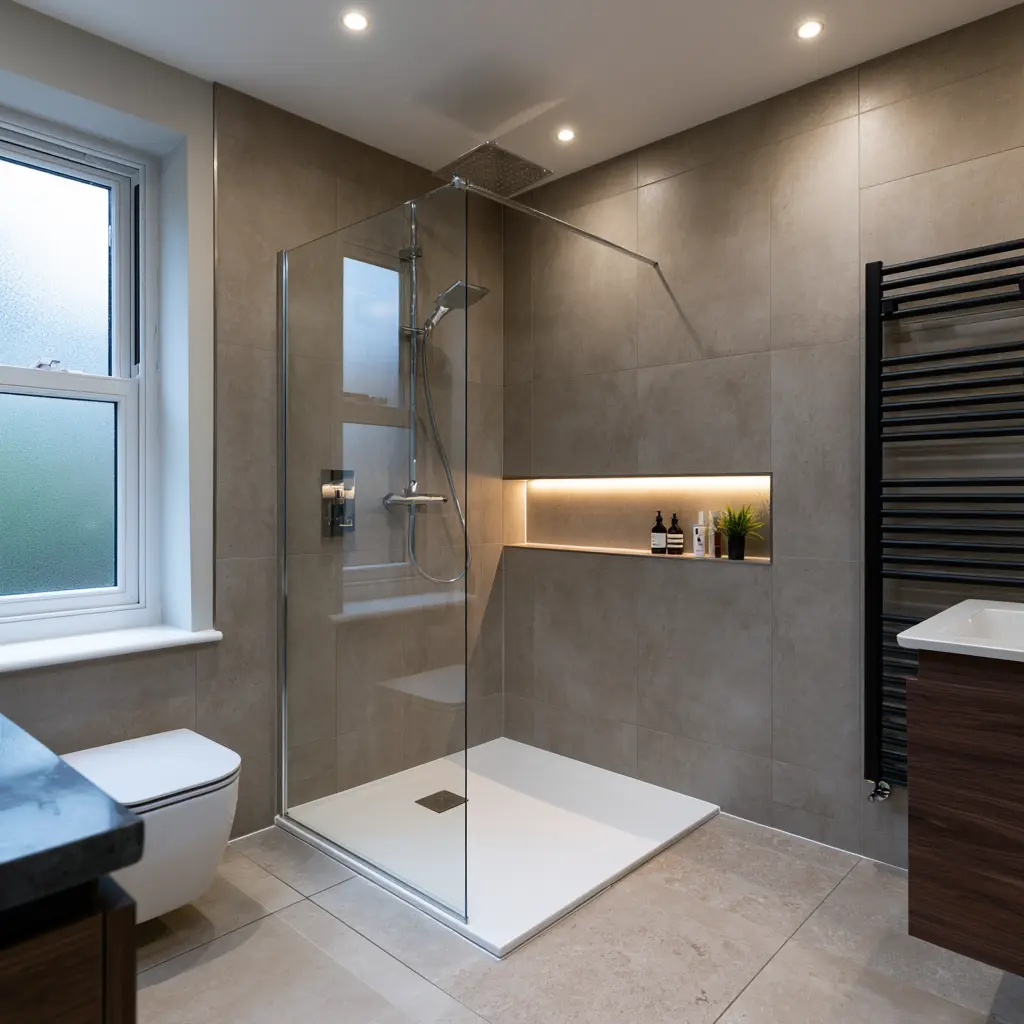
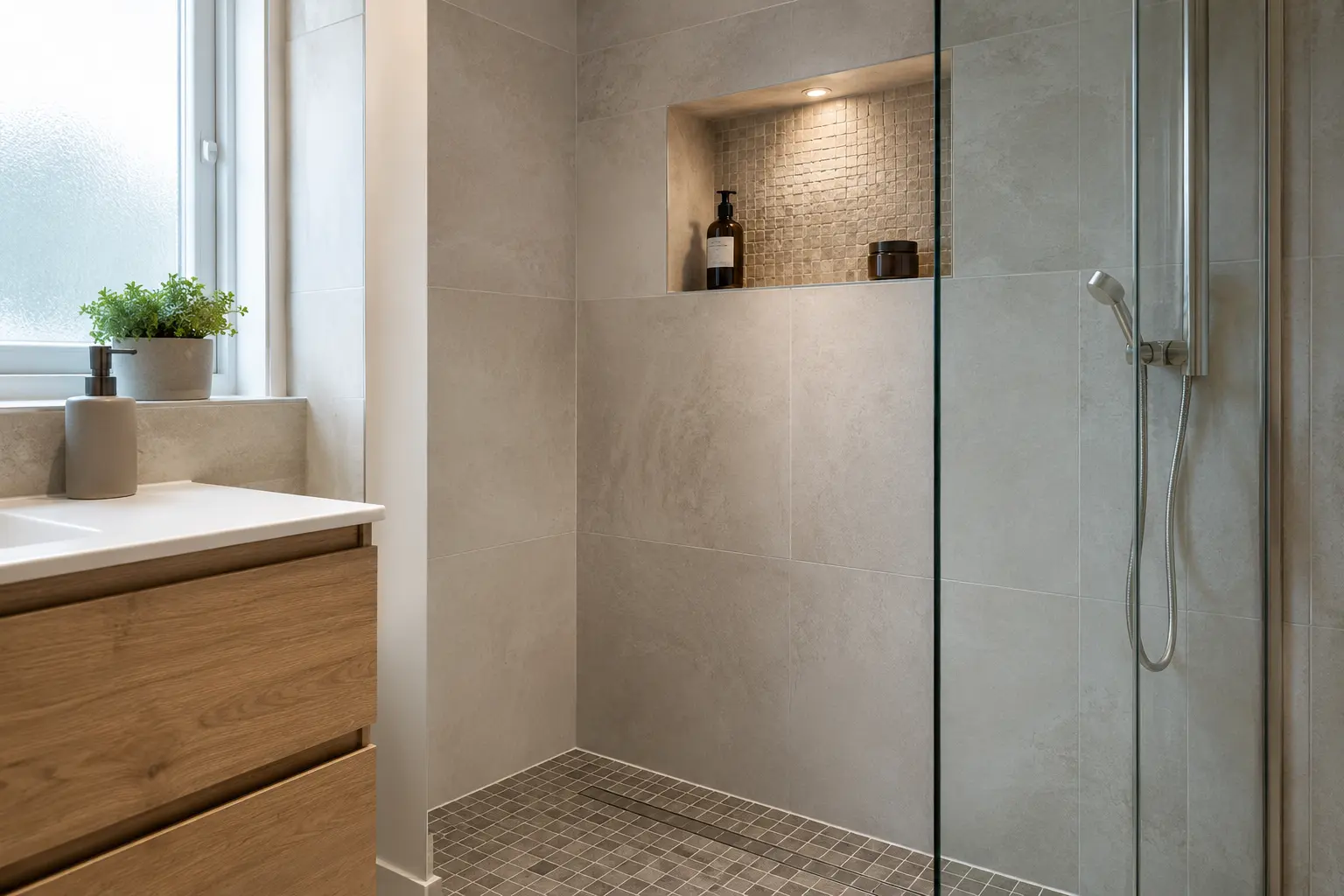
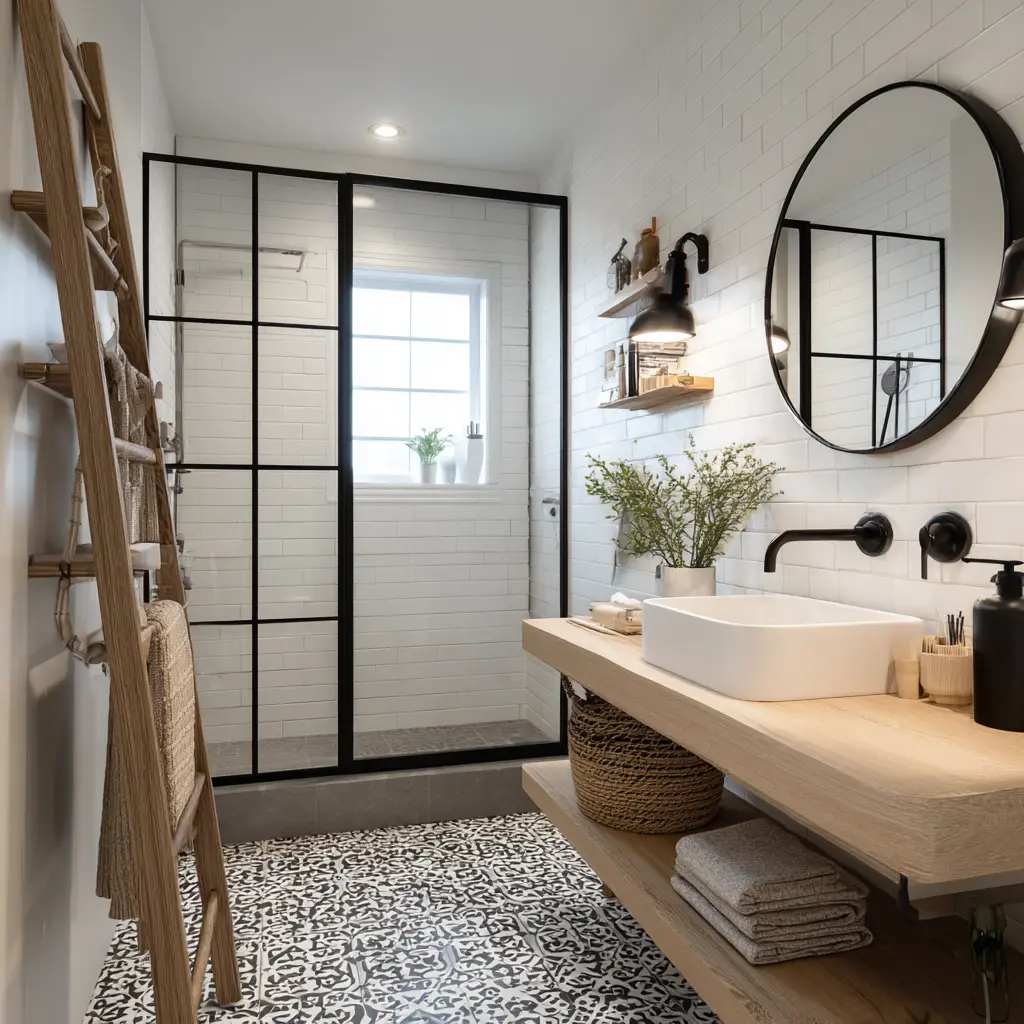
A stone-effect porcelain tile can connect naturally with tiled walls, while a quieter floor can balance a strong panel or feature tile. Bring samples together rather than selecting the floor separately. Check the colour in daylight because grey, beige and white finishes can change considerably under cool or warm lighting.
If underfloor heating is planned, confirm that the floor product, adhesive, preparation and heating system are compatible. Understand the controls and warm-up time. It is a comfort feature, not a reason to reduce ventilation or ignore the room’s main heating needs.
A simple flooring decision checklist
Ask four questions: is the product intended for bathrooms, does it provide suitable grip, can the existing floor be prepared for it, and will it work with any planned heating or level-access shower? Then compare cleaning, warmth, noise and appearance. This order keeps practical needs ahead of a sample that only looks attractive.
Request that preparation is described in the quotation. New boards, levelling, tanking, decoupling layers or welded joints can be essential parts of the floor even though they disappear when the room is finished. Also confirm the transition at the doorway. A neat, comfortable threshold is part of the design and should not be left as a last-minute detail.
- Bathroom-rated finish
- Suitable wet-foot grip
- Correctly prepared base
- Planned doorway threshold
Cleaning and maintaining the finished floor
Ask which cleaner is suitable for the exact floor and whether grout, welded joints or seals need any special care. Avoid assuming that a stronger chemical is better. Some products can dull tiles, damage vinyl or weaken sealants. Use a bath mat where helpful, but lift it regularly so trapped moisture can dry.
Watch for cracked grout, lifting edges, loose tiles or water sitting where it should drain. A small change does not always mean a major fault, but early advice can prevent water reaching the structure below. Keep spare tiles or the flooring product details with your bathroom records so a future repair can be matched more easily.